Visual Context
Here’s what fluids look like with high energy and low viscosity:
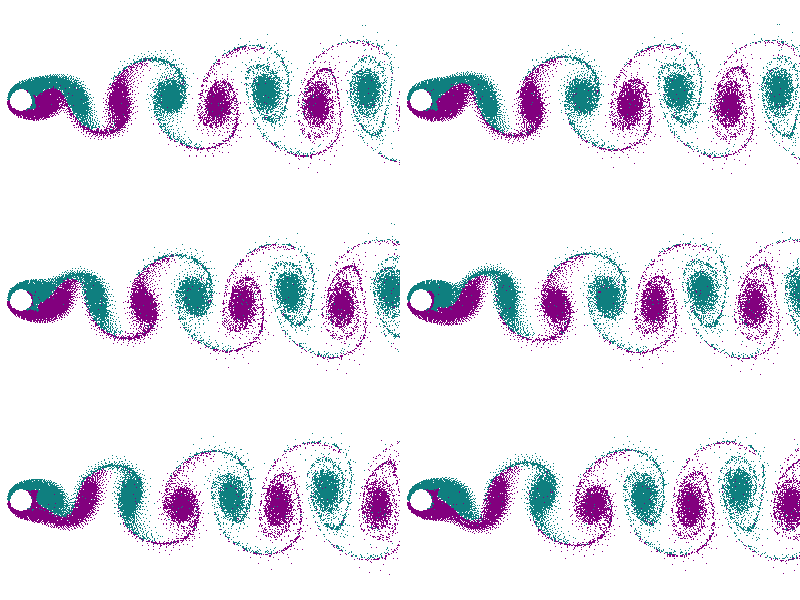
Vortex streets: low viscosity spiral pinwheels

(By Empetrisor - Own work, CC BY-SA 4.0, https://commons.wikimedia.org/w/index.php?curid=105303125)
Kelvin-Helmholtz instabilities along the wind-collision interface that produce vortical rolls
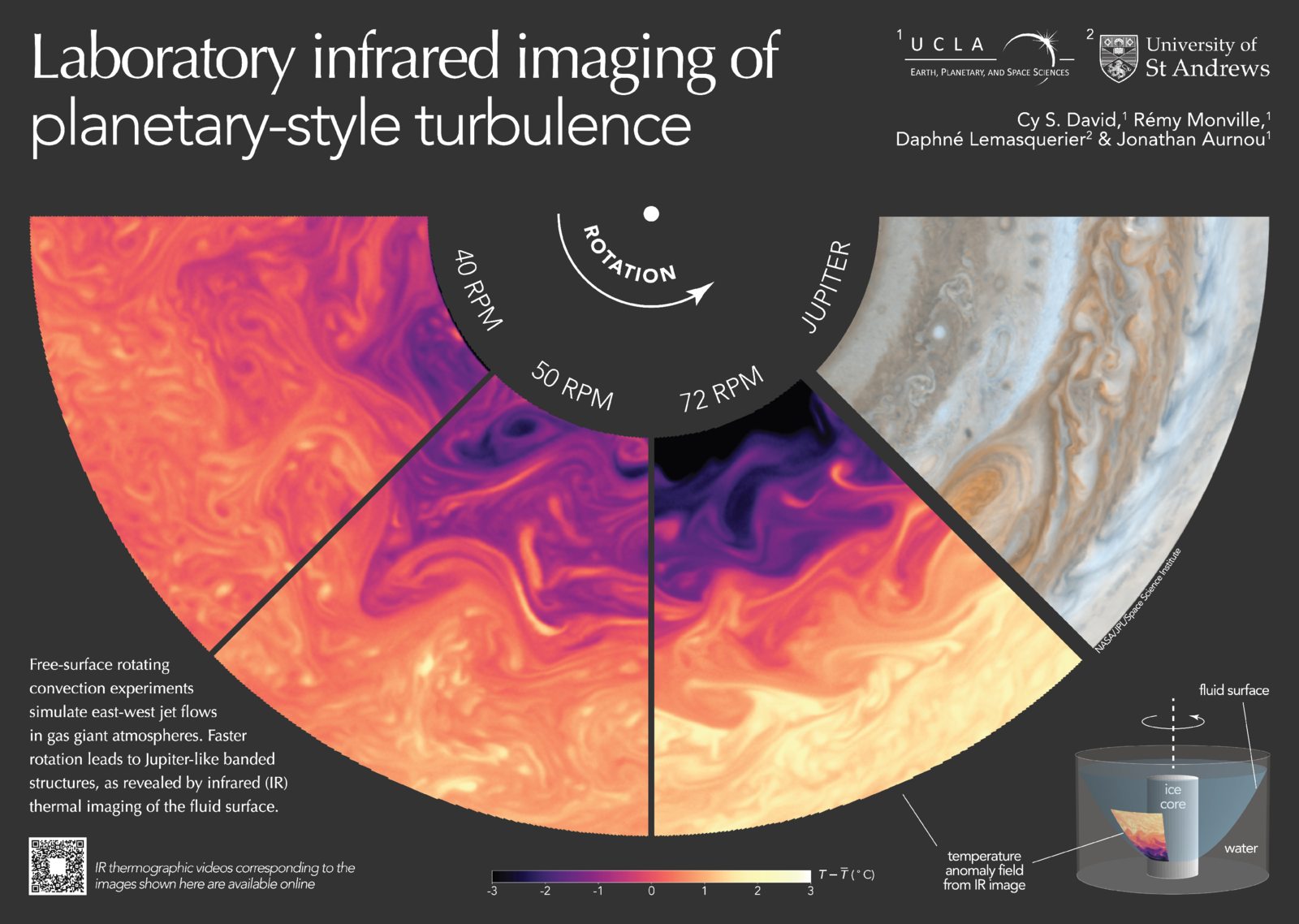
Patterns in the clouds of Jupiter and high-energy fluid imaging with IR
Here’s how they behave when nearly frictionless:
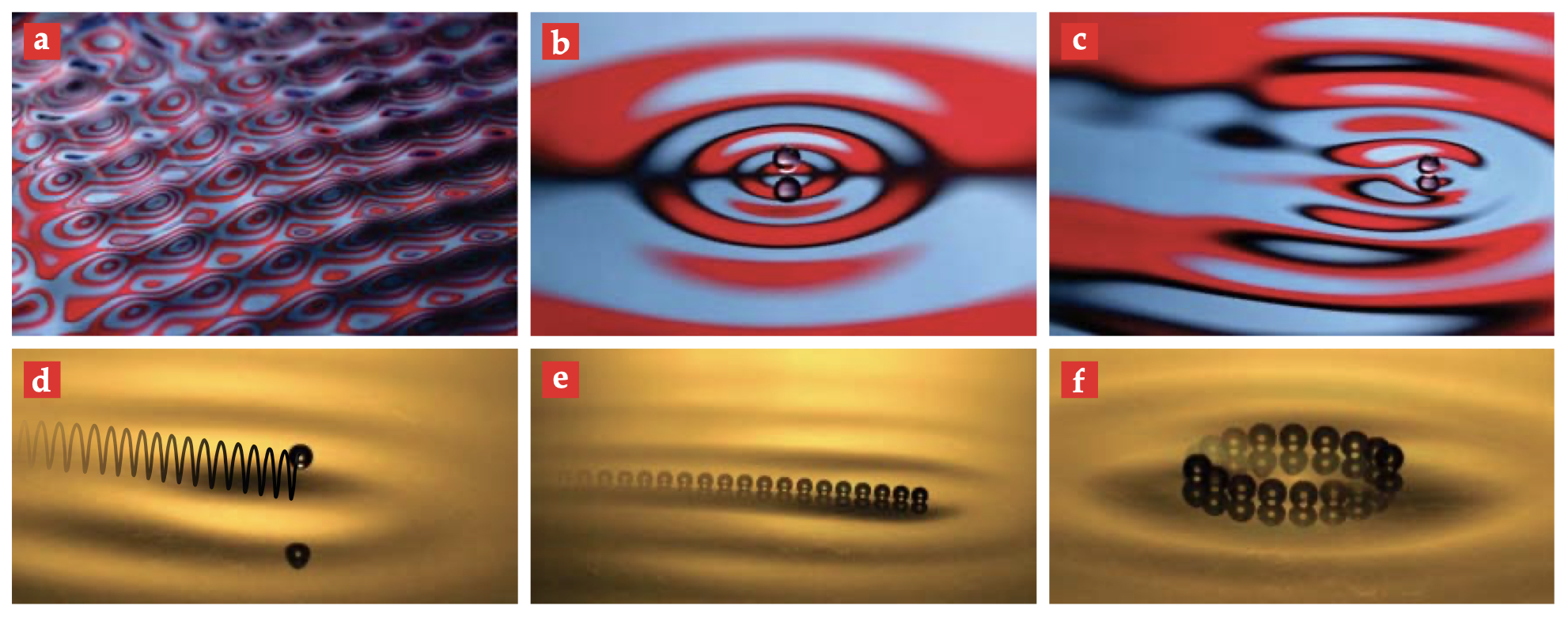
By John W.M. Bush The new wave of pilot-wave-theory”
Pilot wave hydrodynamics
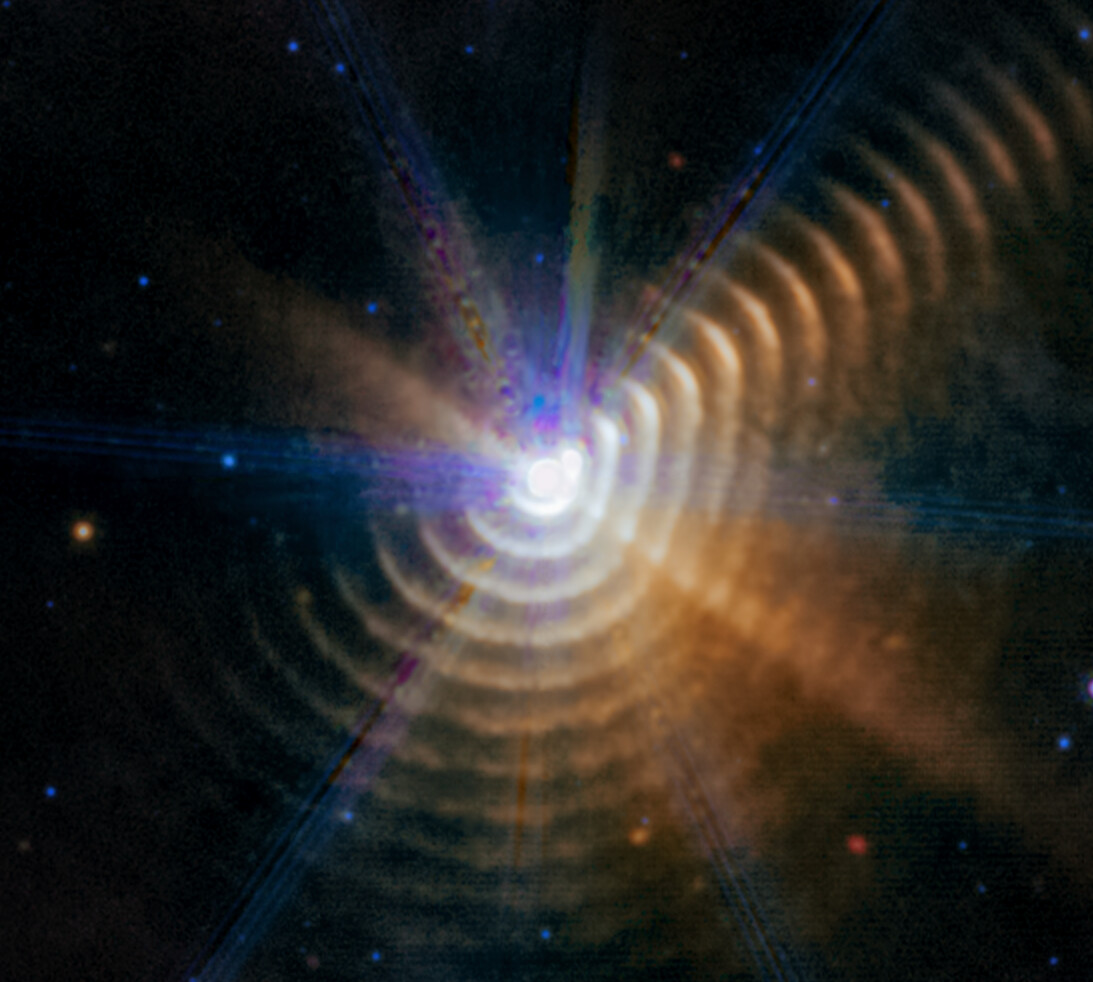
https://esahubble.org/
WR 140 — a Wolf-Rayet + O-star binary whose colliding stellar winds create the spiral “pinwheel” shock structure visible in this JWST infrared image. Kelvin-Helmholtz instabilities along the wind-collision interface produce vortical rolls — a vortex street at stellar scale, and a close cosmological analog for the boundary-layer dynamics of the dc1 substrate.
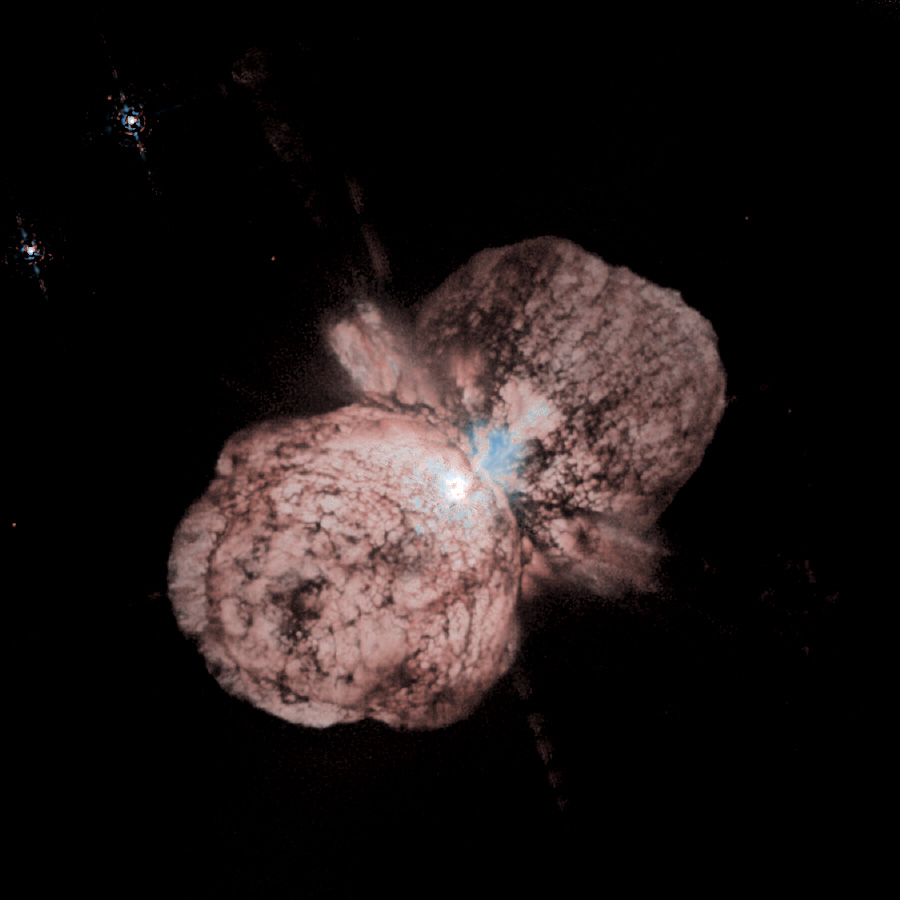
https://esahubble.org/
Eta Carinae - a multi-star orbital system complex that displays wind-wind collisions with X-ray-bright structures that vary with orbital phases, showing counter-rotating eddies forming along the contact discontinuity.
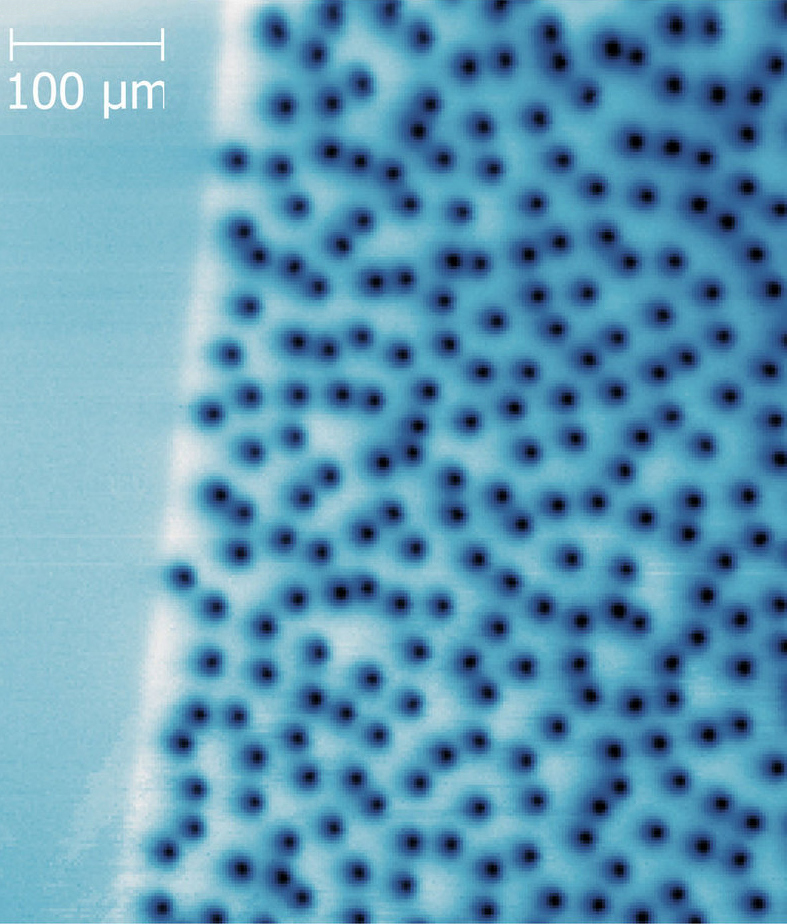
By Frederick S. Wells, Alexey V. Pan, X. Renshaw Wang, Sergey A. Fedoseev & Hans Hilgenkamp - https://www.nature.com/articles/srep08677, CC BY 4.0, https://commons.wikimedia.org/w/index.php?curid=57135410
Type II superconductor vortex lattices
In low-viscosity environments with high turbulence, the fluid forms figure-8 pairs of vortices to channel away energy disturbance at high-energy boundaries. These structures are stable because the vortices co-rotate in fields of opposite-rotating layers joining them. Each field is in its own boundary layer; between boundary layers, opposite-spinning layers form as racetracks due to the elastic, accelerating collisions at the boundaries — true frictionless vacuums in the path of the particle inside the racetrack created by the accelerated substrate.
Now let’s switch to the dc1 substrate, starting at the beginning.
The origin event in the substrate picture. (1) Before the transition: chaotic dc1 particles with no structure — no speed of light, no Planck’s constant, no gravity. (2) As the expanding substrate cools through T_c, superfluid bubbles nucleate — dc1 particles form vortices at many scales. (3) Bubbles merge and percolate; counter-rotating boundary layers form between co-rotating regions; latent heat drives ~60 e-folds of exponential expansion. (4) The transition completes: a coherent superfluid with modons (photons) propagating at c, organized matter, and all emergent physics activated. This IS inflation — no inflaton field needed.
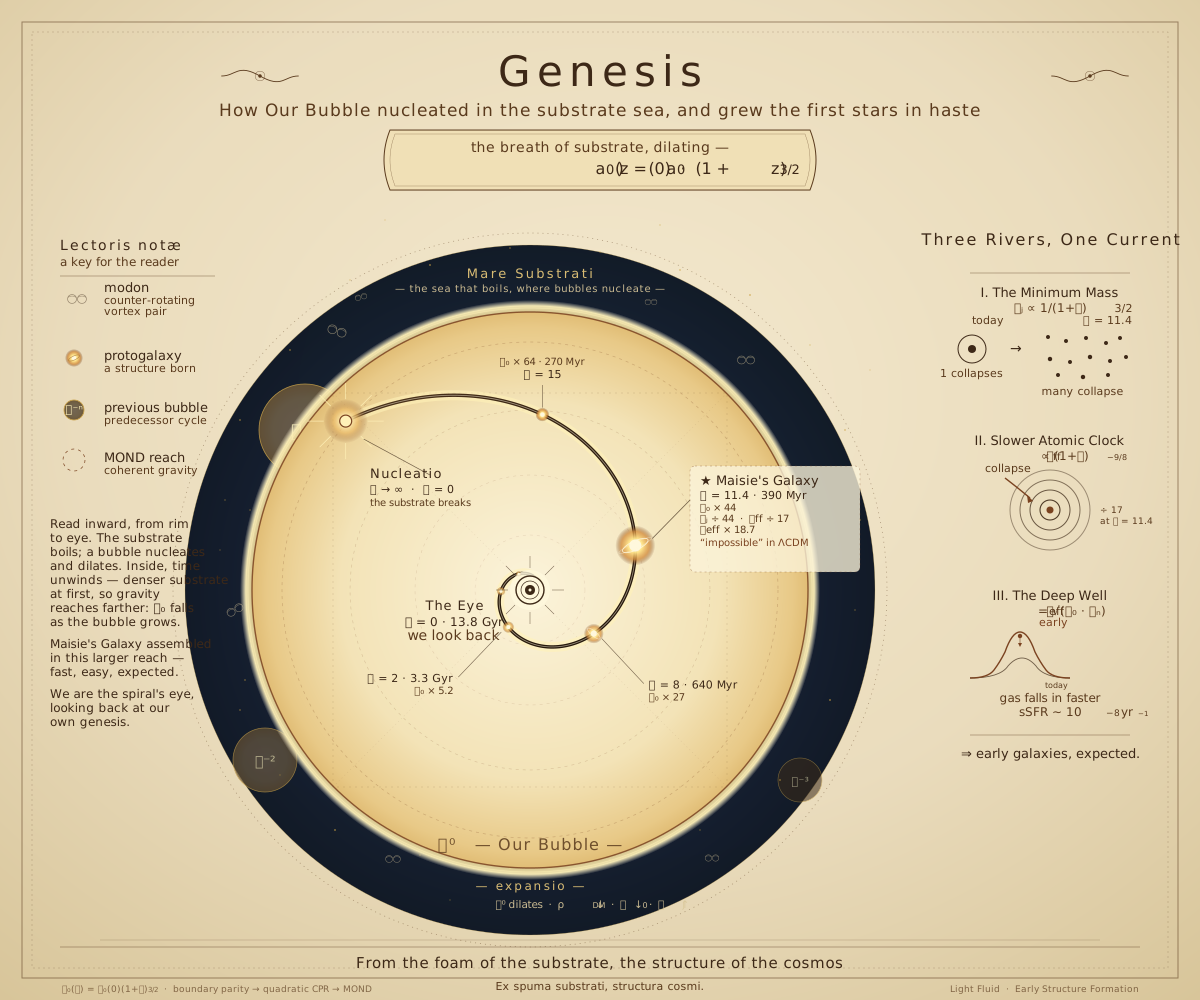
Looking deeper in space, back in time, into the spiral, echoes of the earlier phases remain:
The bridge equation - connecting the math of the inside to the outside:
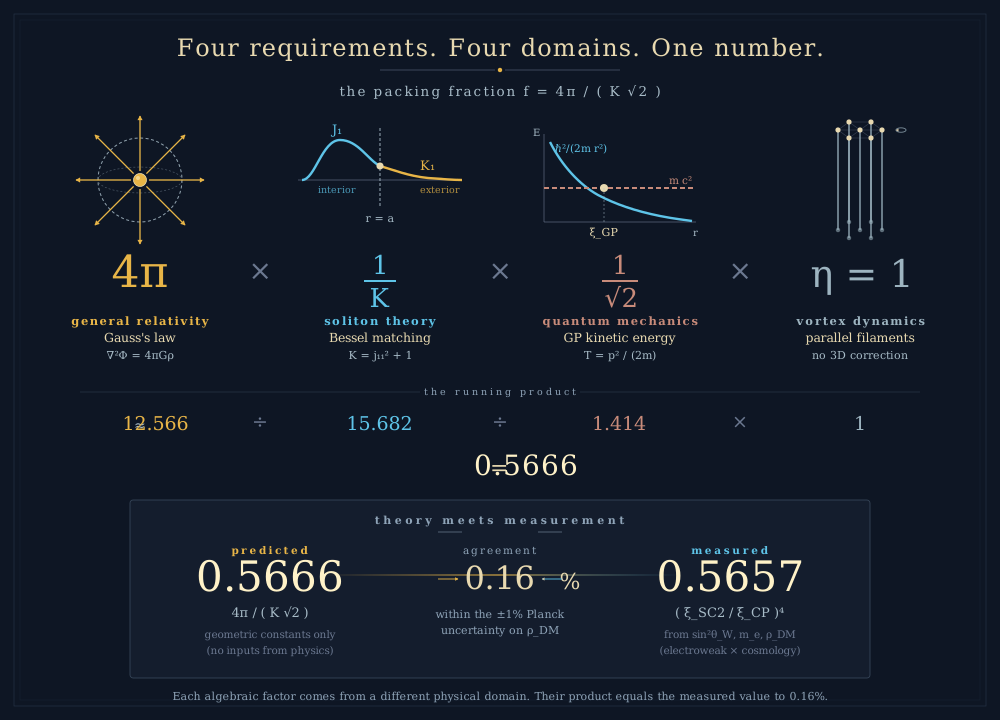
And how photons are emitted:
The bridge equation unites two regimes of waves:
Three photons spanning twelve orders of magnitude in energy — same object: a counter-rotating vortex dipole of radius \sim\lambda, translating through the substrate at speed c. The energy E = h\nu is encoded in the intensity of internal counter-rotation, not in size or speed. Unlike KdV solitons (where amplitude affects velocity), the Larichev-Reznik modon speed is amplitude-independent — this is the physical content of Lorentz invariance for light. There is a minimum modon energy E_\text{min} = hc/\xi \approx 13 meV (wavelength \sim 100\;\mum); below this, energy propagates as collective lattice excitations rather than modons.
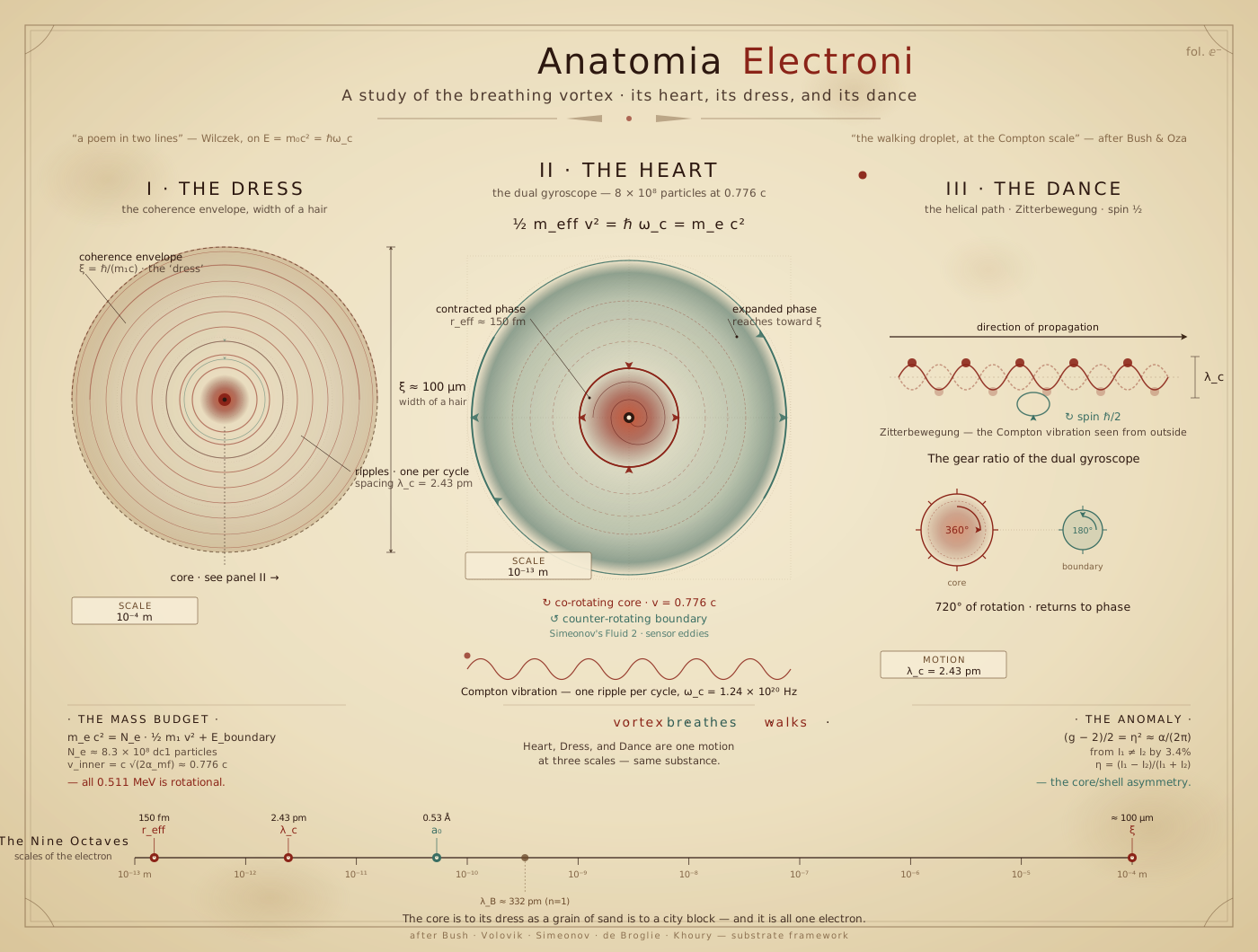
Here’s the raceway where the electron lives, the boundary layer that forms a standing wave in the substrate, a laminar stream for the electron:
Zoomed-in cross-section of the electron’s raceway in the dc1 superfluid substrate. The electron is a dc1 vortex (purple spiral with a dense core) riding a co-rotating channel (amber). Counter-rotating layers above and below (teal) shear against the raceway. All three bands are populated with smaller dc1 vortices that spin with their channel — vortices inside vortices, all the way down. At the boundaries, counter-spinning eddies form like whitewater rapids in an alternating Kelvin-Helmholtz pattern, marking the shear between layers. This is where Simeonov’s “Fluid 2” lives, responding to density gradients in “Fluid 1” — the hydrodynamic origin of the quantum potential. The gentle arcs at the edges indicate this is a section of the electron’s quantized path around the proton.
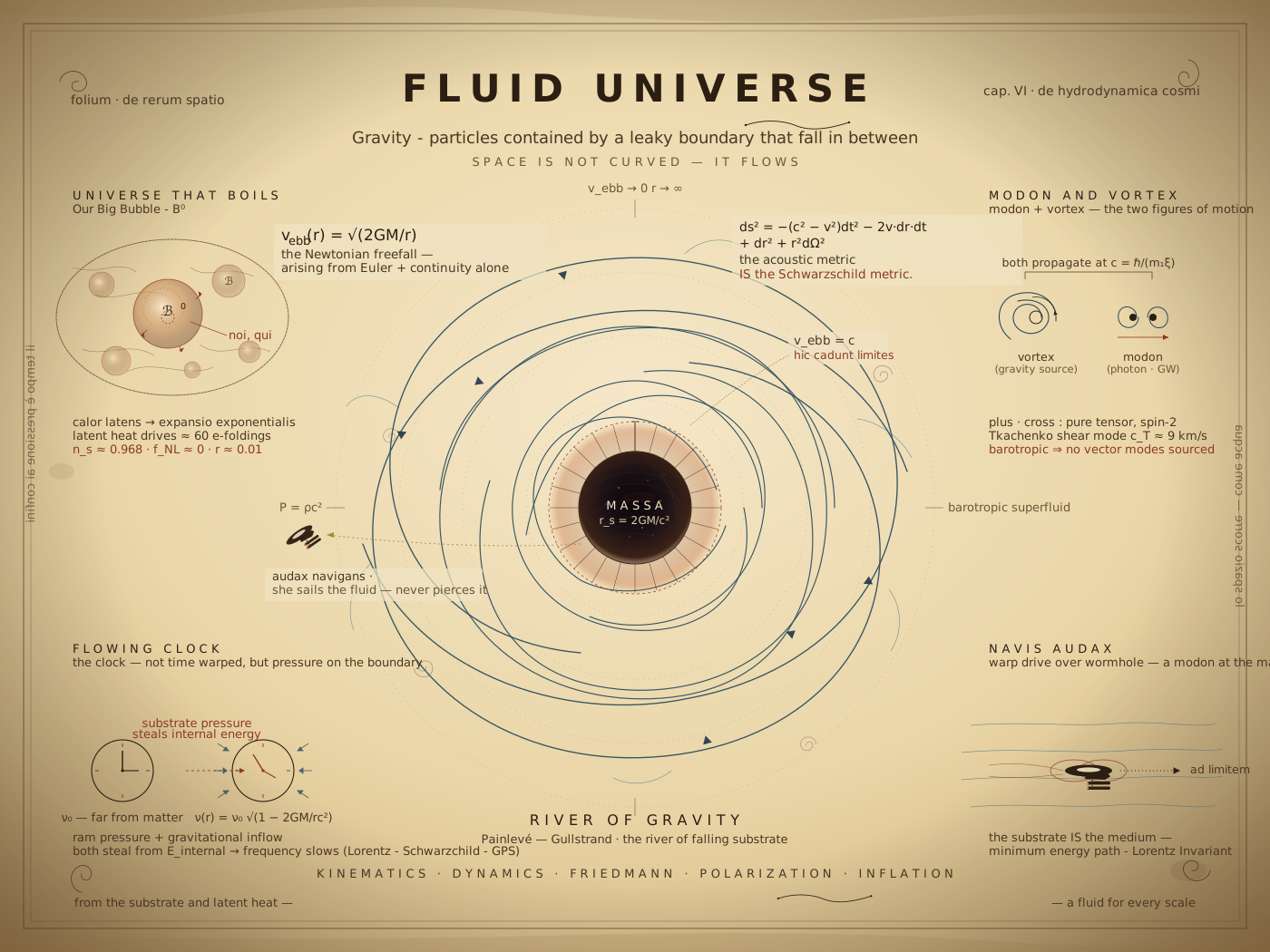
A profile view of a tiny segment of Earth’s orbital track through the dc1 substrate — as if we cut the orbit open and looked at it from the side. The Earth–Moon system sits in the middle of a laminar co-rotating channel (green) that the system has carved into the superfluid, exactly the way a ring of kids running the same direction around a circular pool carves a steady stream from the water. Above and below that channel are two thin turbulent rapids (coral) — counter-rotating boundary layers where the moving channel meets the quiet substrate beyond. Because the substrate is frictionless, these rapids do not dissipate; they persist for the entire life of the orbit. Through them, a slow dc1 ebbing current leaks outward — biased toward the Sun — then accelerates into the next layer. That leak is gravity:
G \;=\; \frac{f_{\text{cross}} \cdot v_{\text{rot,outer}}}{4\pi}, \qquad f_{\text{cross}} \approx 10^{-15}
The same boundary-layer physics that creates the electron’s raceway around the nucleus creates Earth’s raceway around the Sun — scaled up by about 10^{31}.
Here’s data from 153 galaxies, 2693 data points, recording five decades of luminosity shows the substrate model matches observation and shows the expected discrepancy for tidal dward galaxies:
Young TDGs are still settling, so vcirc underestimates the equilibrium value — points drift below the RAR at low gbar where dynamical times are longest.
Substrate accurately models both normal galaxies (blue) and gas-dominated dwarfs (cyan):
Latest DESI 2 - dark energy results match perfectly with Volovik’s C=1 and moraine crust at \zeta=0.63 - another link in the bridge equation:
Substrate density dilutes with cosmic expansion like any pressureless environment, with the result that the acceleration scale for far away galaxies is higher than expected by the standard MOND model (which predicts constant acceleration). This explains these unusually high redshifted galaxies like Maisie’s:
Curious to see how it all ties together?